Empowering Economic Growth
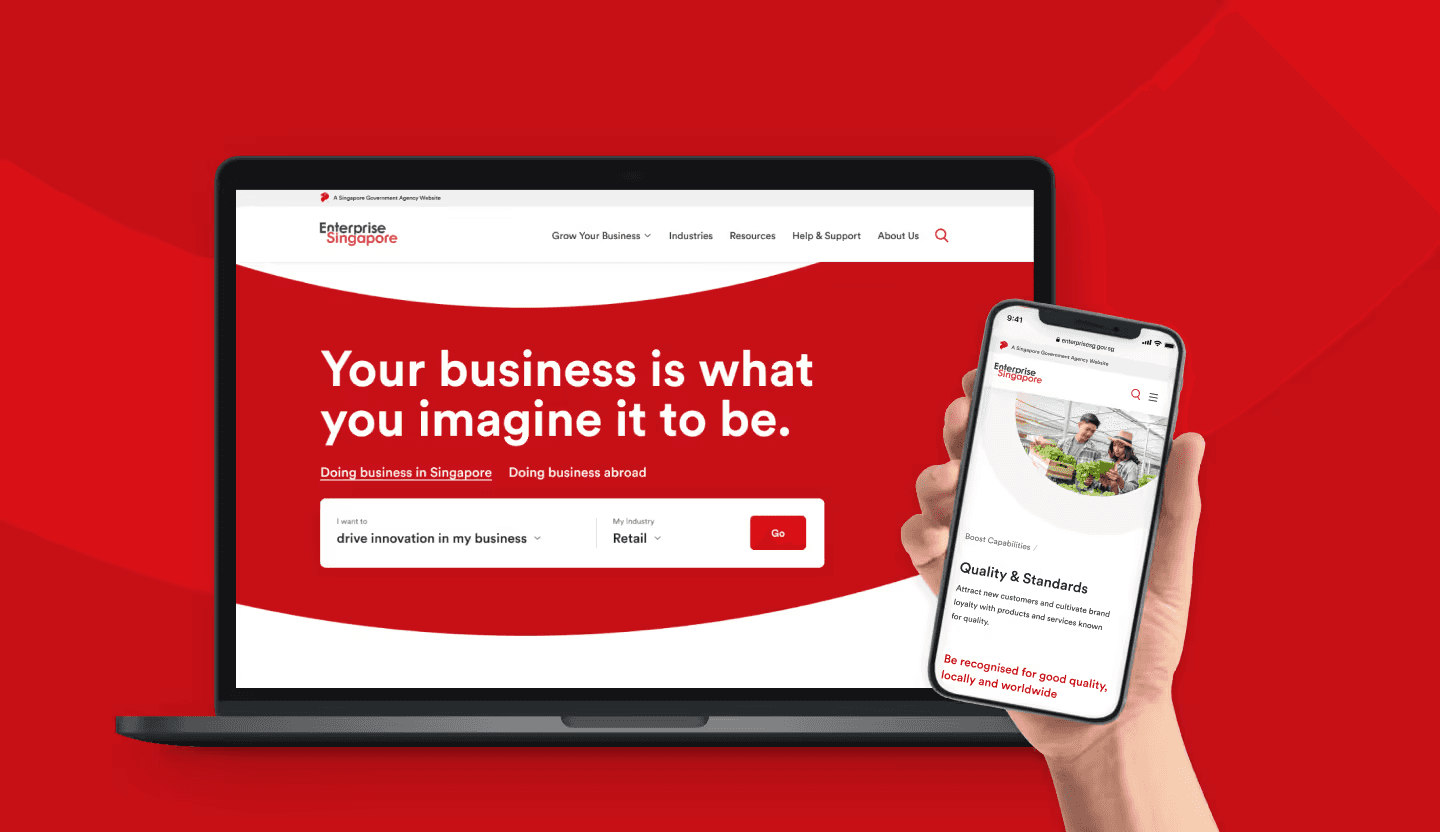
Enterprise Singapore
Public Sector
Web
Mobile
Background
Enterprise Singapore needed to translate its core mission—supporting the growth of local and foreign businesses—into a more intuitive, outcomes-driven website experience. Despite offering a wide range of products and services to provide support to businesses during COVID-19, they saw low engagement and high drop-off rates.
Internal teams had conflicting views on structure and strategy, leading to a fragmented platform that didn’t reflect how users actually navigated or made decisions.
My Role:
Lead UX Researcher
I led all research activities across this engagement: study design, participant recruitment, execution, synthesis, and senior stakeholder reporting. I also coordinated with an external vendor for usability testing and eye-tracking implementation.
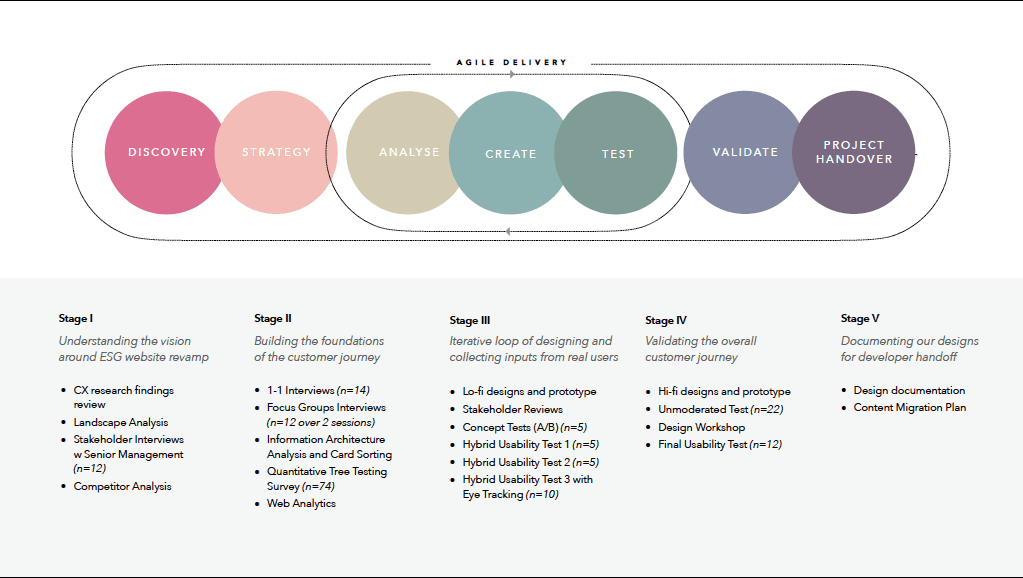
The Process
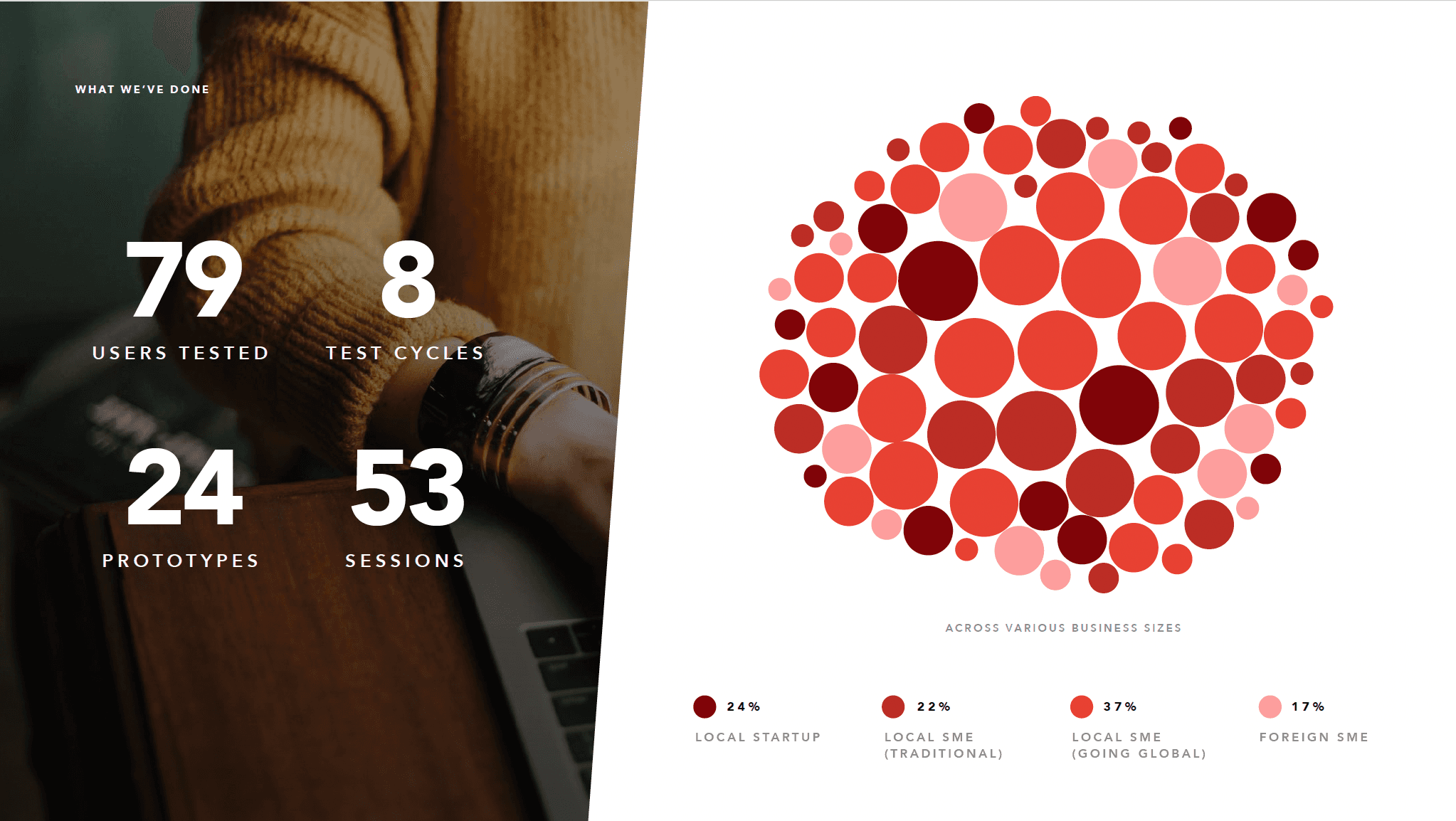
Our Users
Research Strategy and Decisions
Clarified the primary audience to be startups and SMEs who lacked direct support from account managers, as the main users of the site.
Balanced research scope, sampling businesses by size, stage, and industry to reflect real user diversity.
Mapped behaviour to decision-making, by ensuring participants held roles responsible for evaluating and using the platform on behalf of their businesses.
Tested iteratively through a combination of card sorting, tree testing, and phased usability sessions to refine navigation and content strategy.
Validated design intent by using eye-tracking in later testing phases to confirm content structure aligned with user attention and mental models.
What We Discovered
1. Intent-first journeys beat product-first structures
Internal teams prioritised showcasing the full range of offerings. But users, especially SMEs, wanted guided flows based on business goals, not feature catalogs.
We shifted the site strategy from broad category listings to industry- and need-driven navigation, with a content recommender as a key feature to drive engagement.
→ Users in testing responded positively, expressing greater clarity and interest in Enterprise Singapore’s services beyond just grants.
2. Users know their pain points—but can’t self-diagnose solutions
Teams emphasised informational depth. Users wanted clear next steps and actionable paths, and visibility on experiences of other businesses to evaluate the suitability of products and services.
We redesigned key product and industry pages to surface tangible benefits, step-by-step guidance, and stories from other businesses, replacing overwhelming content dumps.
→ Final designs included scalable templates and a phased roadmap. Based on trust built through this research, the client extended Aleph’s scope to content strategy.
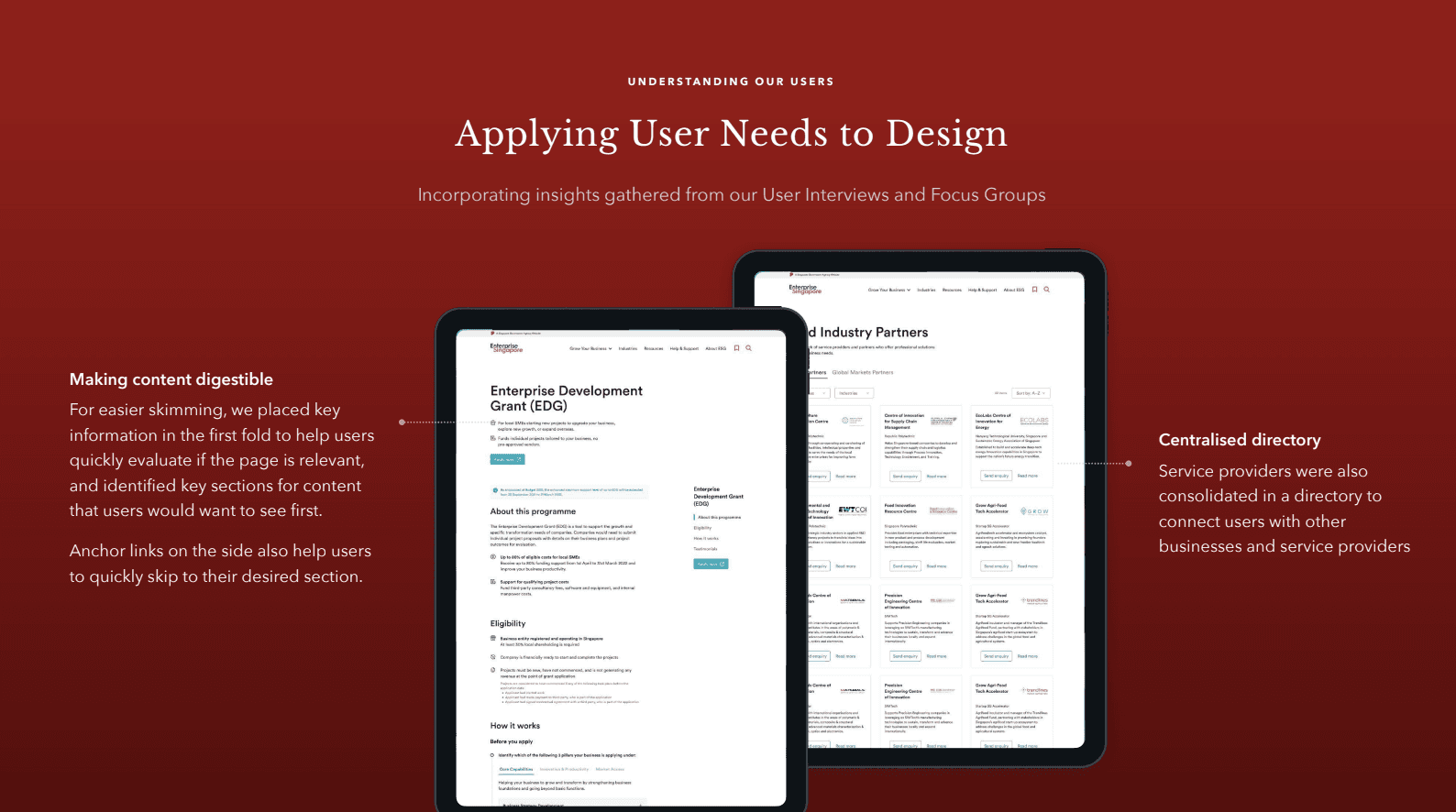
Translating Business Priorities to Design
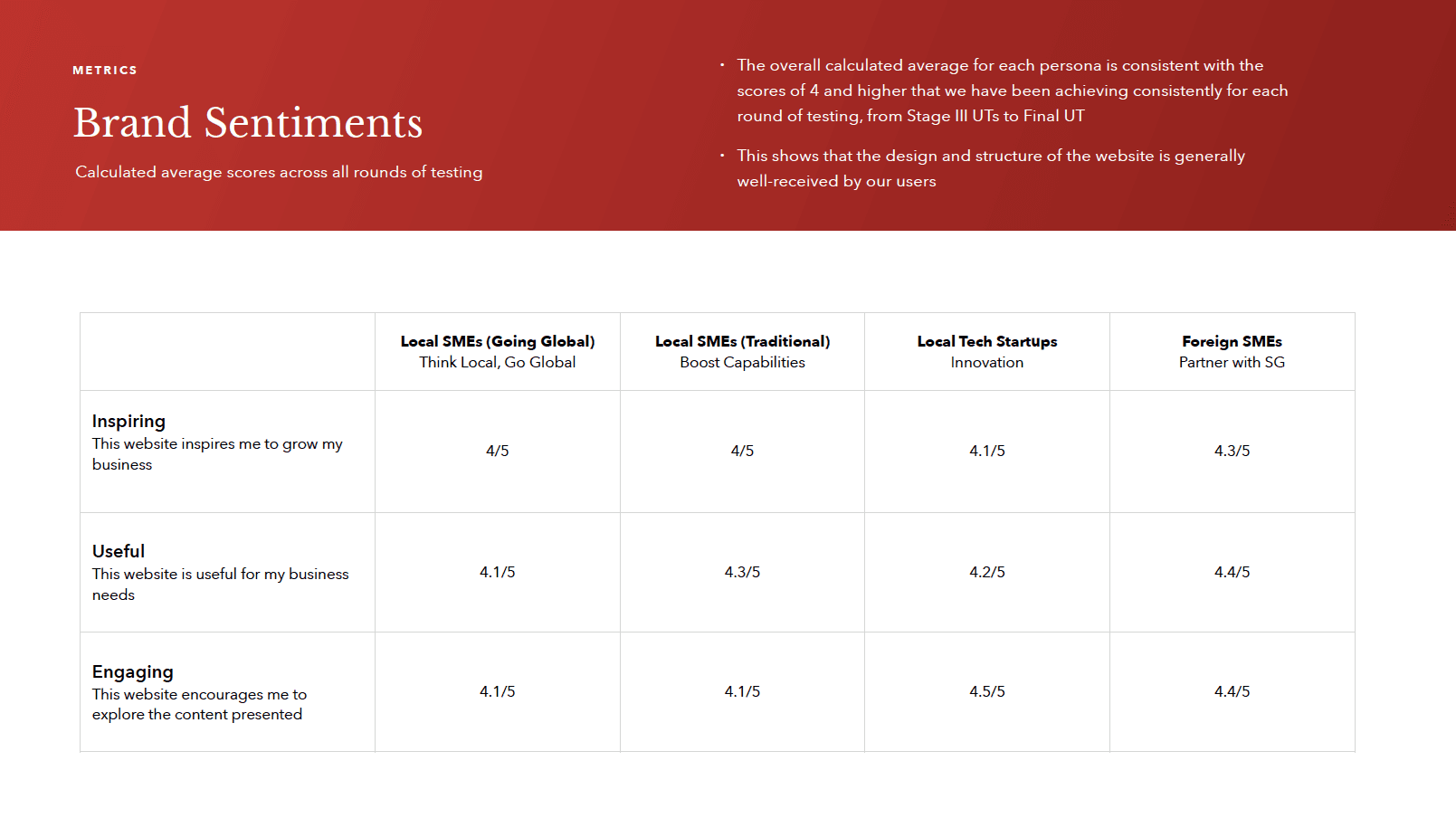
User Satisfaction Scores
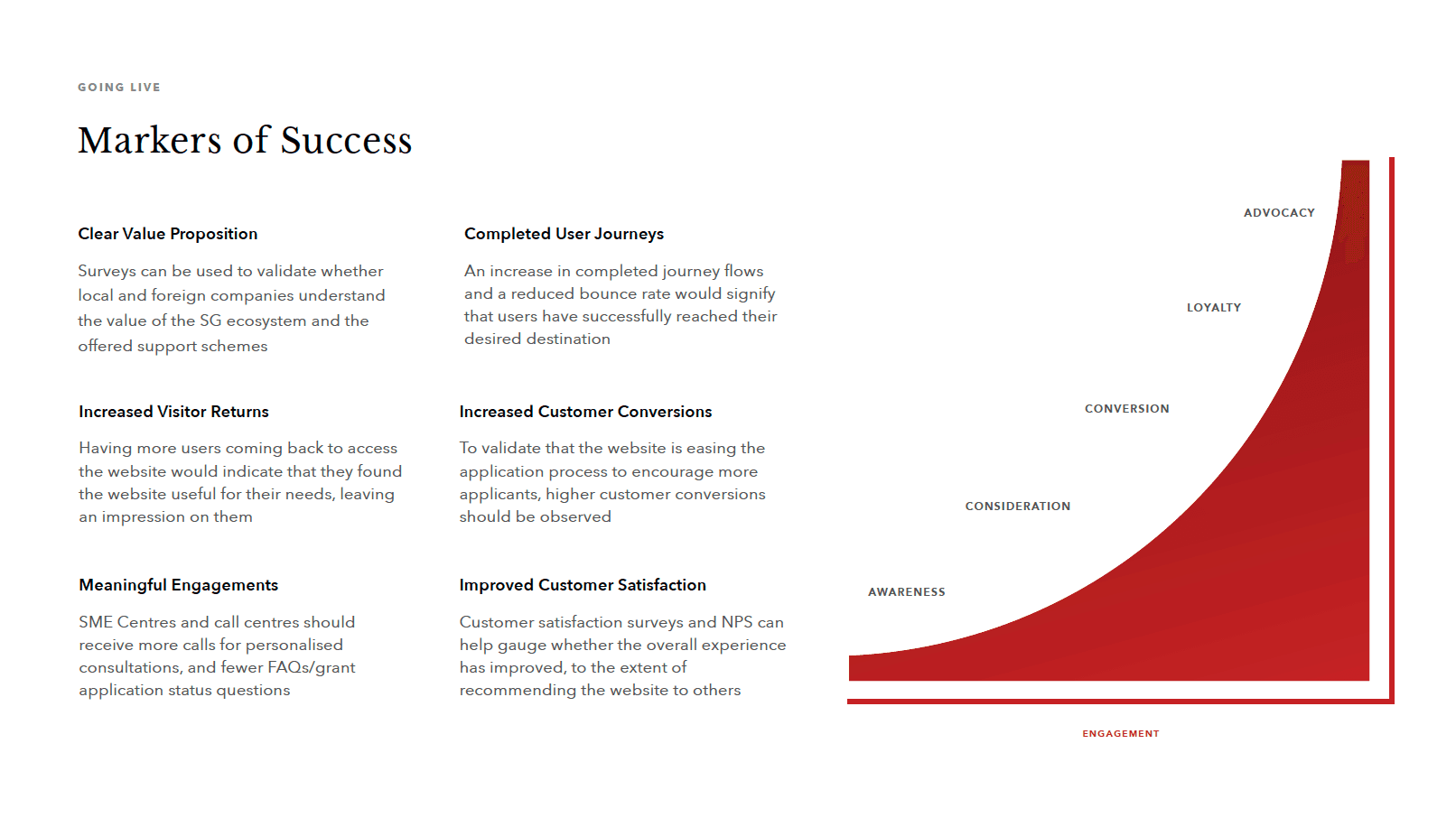
Success Metrics for Stakeholders
“It’s more user friendly, less cluttered. Straight to the point, gives step by step instructions on what to do and how to work with ESG.”
Operations Manager, Local SME (Going Global) | User
Results and Impact
Delivered a new site architecture built around business needs and intentions
Developed modular templates for fast rollout across teams
Shifted client mindset from product broadcasting to guided enablement
Led to further engagements, including deeper content work
“I thought it was a good product and a significant improvement [...] The revamped website will go a long way towards improving public perception of what we do. It's a big step forward.
Jeffrey Siow | Managing Director/COO of EnterpriseSG
What I Learned
Understanding decision-making behaviour under time pressure was critical. This work reinforced how clarity through guidance—not just completeness by accessibility—builds user trust. Bringing that clarity into team alignment was just as valuable as the product outcomes.