Reimagining Public Healthcare
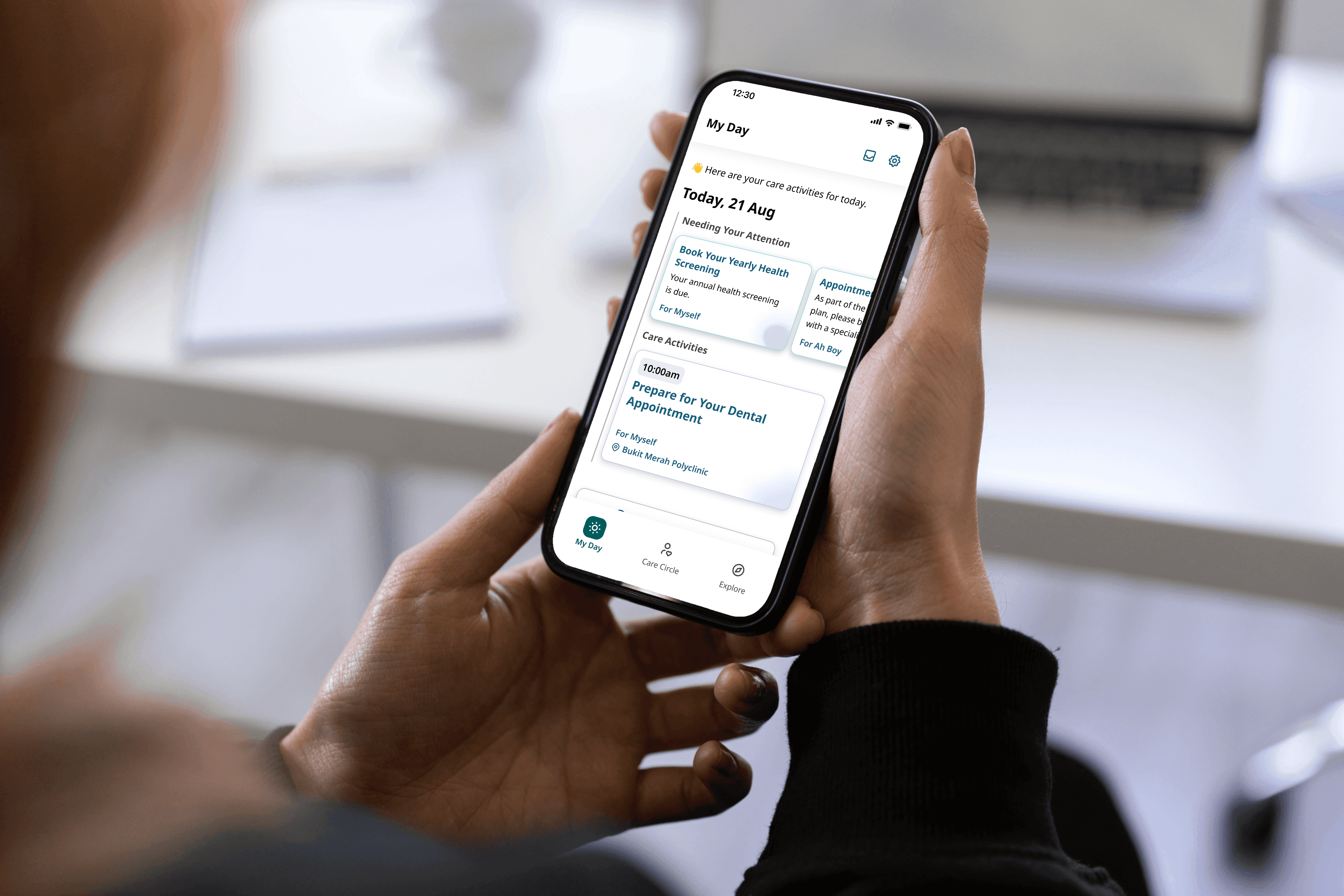
Ministry of Health
Synapxe
Healthcare
Mobile
Challenge
Singapore’s Ministry of Health (MOH) wanted to unify the healthcare experience across the country’s three health clusters.
Each cluster had its own app with overlapping functions; appointment booking, medication tracking, health records, caregiver access, payments. But the apps were policy-led and siloed; citizens had to manage fragmented journeys and download multiple apps just to care for themselves or their families.
My Role:
Lead UX Researcher
I partnered with the Chief Experience Officer to lead all research activities; planning, fieldwork, synthesis, and stakeholder alignment.
This included UX audits, interviews, surveys, and usability testing. I worked closely with designers to translate behavioural insight into design improvements for the new, unified HealthHub+ experience.
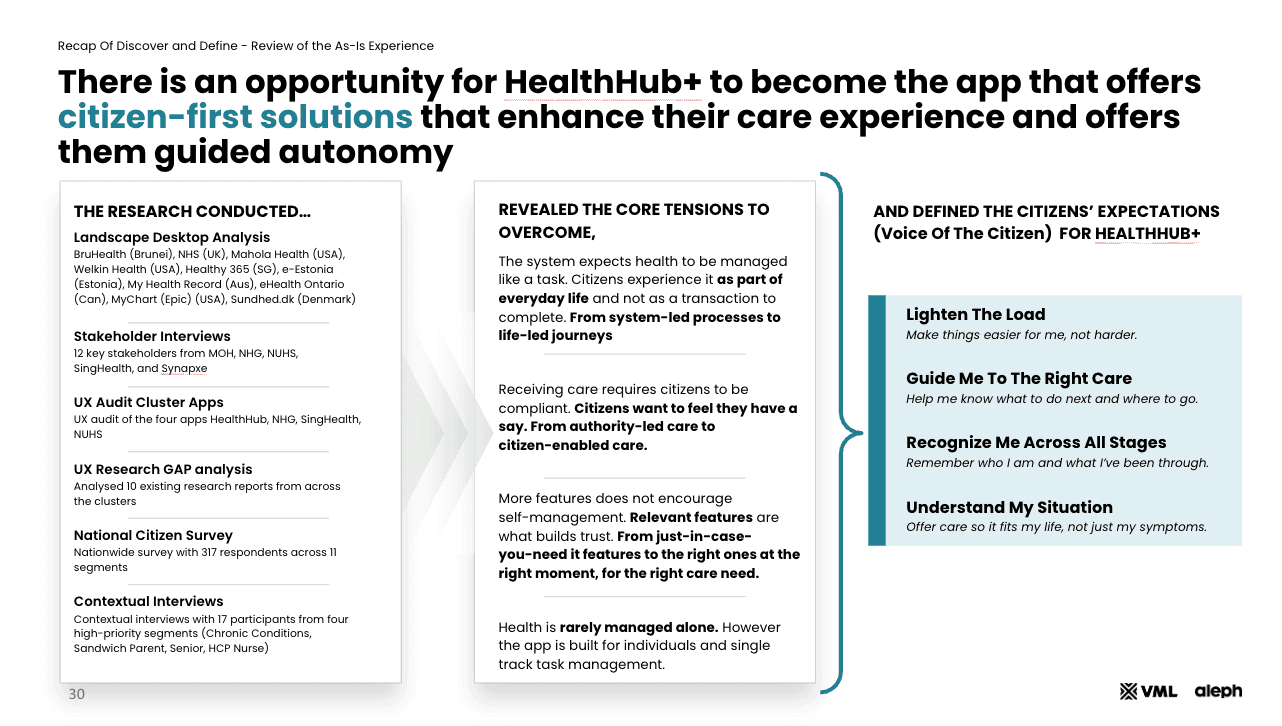
Process and Core Tensions
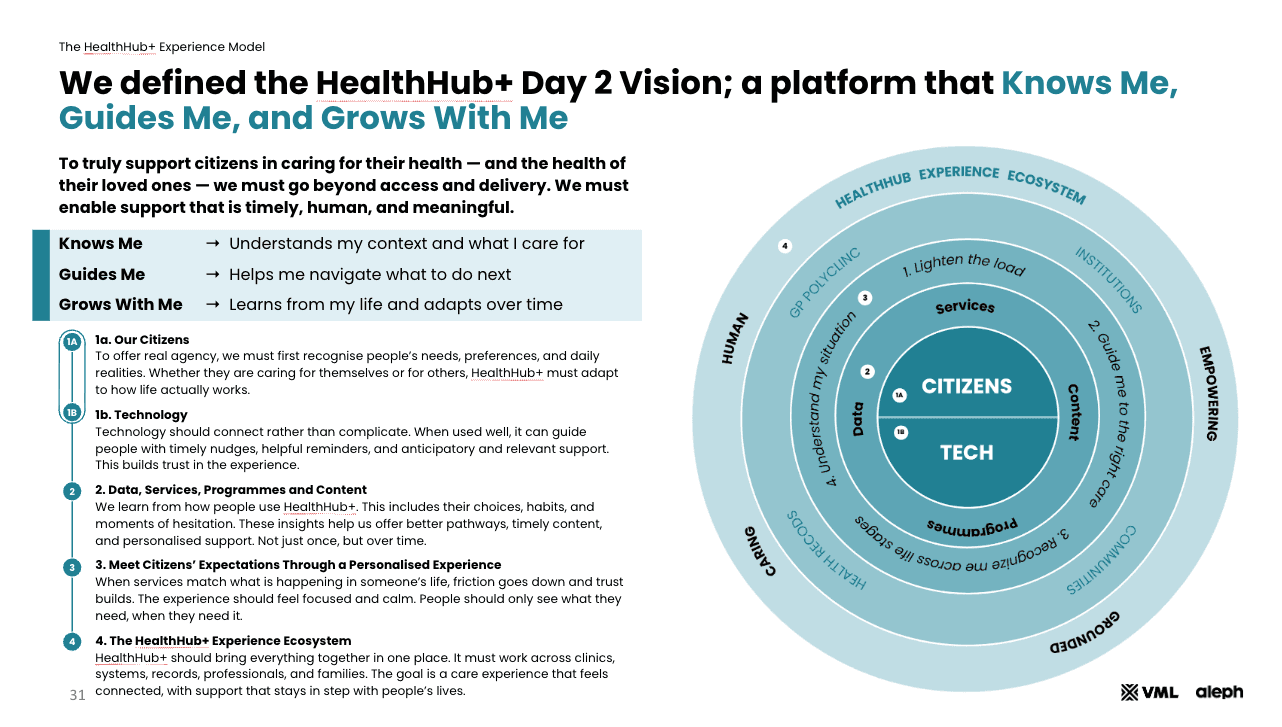
HealthHub+ Experience Model
Research Strategy and Decisions
Audited all existing cluster apps to surface overlaps, inconsistencies, and opportunities to simplify the experience
Identified key segments like chronic condition patients and family caregivers to focus our personas and journeys
Merged insights across methods to reveal meaningful differences between self-care and caregiving behaviours
Ran stakeholder workshops across the three clusters to align policy, tech, and user needs, building a shared vision for what “good” could look like
Navigated cross-cluster complexity and systemic friction to guide clusters toward shared goals and realistic implementation paths
Led constructive discussions that championed the user perspective, earning trust and collaboration from a complex client ecosystem of multiple organisations and stakeholders.
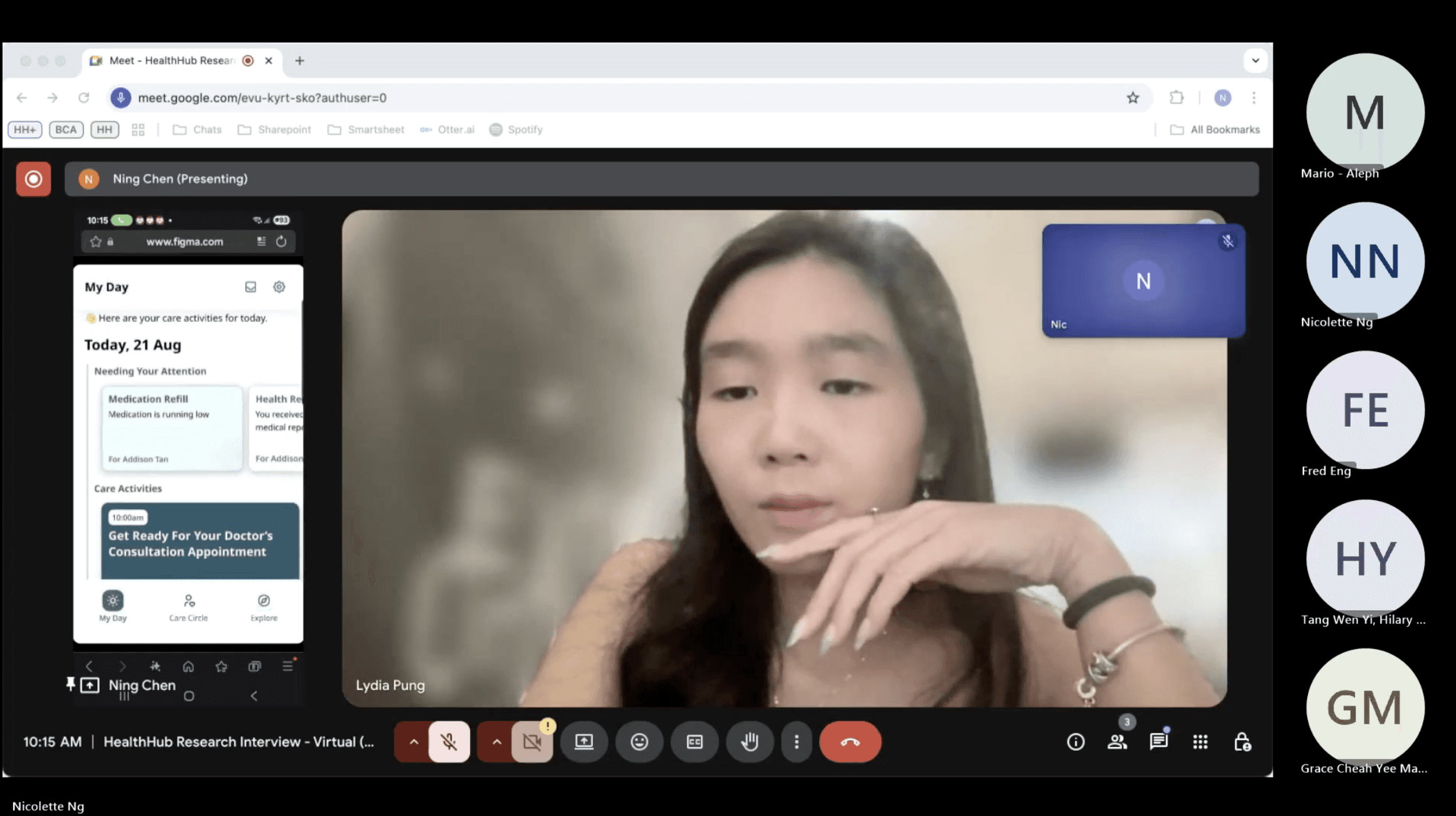
Usability Testing with Mirror Rooms
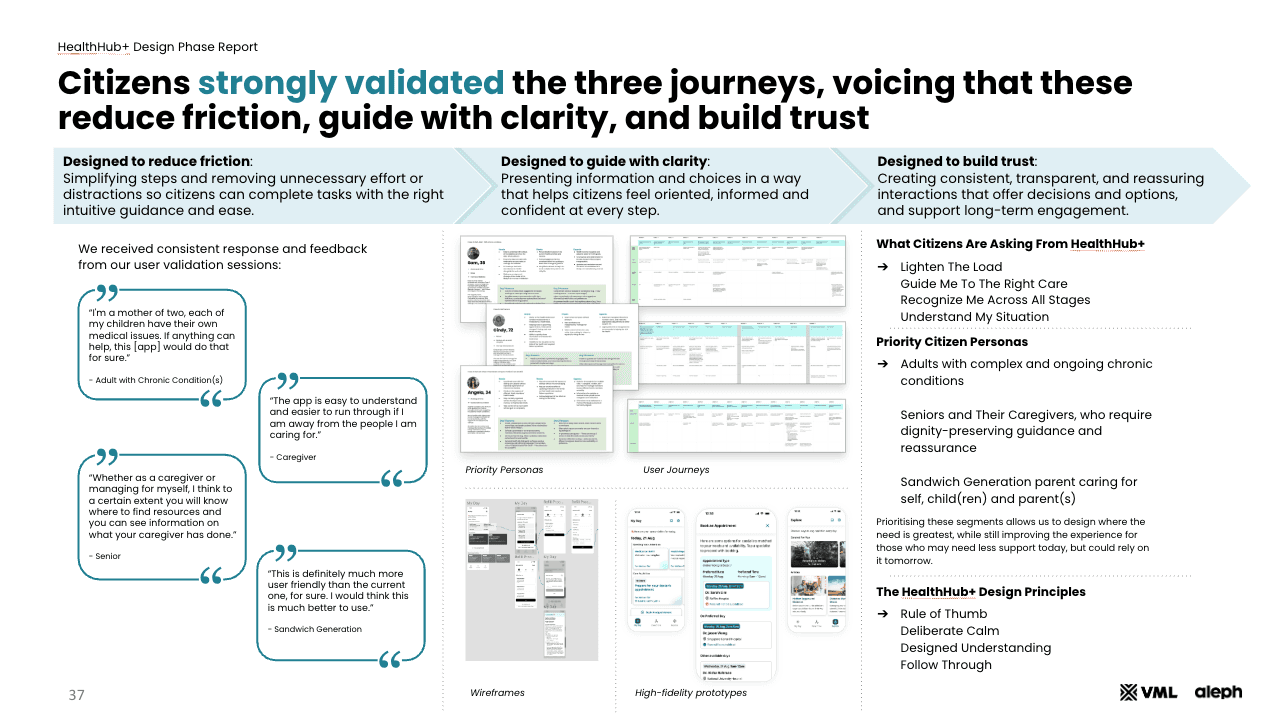
Validation of Health Journeys
What We Discovered
1. People want care that fits their lives—not just check boxes
Current systems structured care around rigid, compliance-driven processes. But users wanted flexibility—tools that adapt to their routines rather than dictate them.
We reframed the app from a task checklist to a guide—something users could lean on to manage care confidently on their terms. Step-by-step flows with recovery patterns and contextual guidance were introduced to support informed, independent decision-making.
→ Users said they felt more confident and in control, with less stress around managing care.
2. Managing health is a team effort
Most apps assumed health was managed by one person. But in reality, care is often a shared responsibility across family, friends, or professionals.
We redesigned the platform to support multi-role coordination, allowing shared access to information and actions without switching accounts.
→ Caregivers especially valued being able to manage multiple care activities in one place, and finally felt supported by the system.
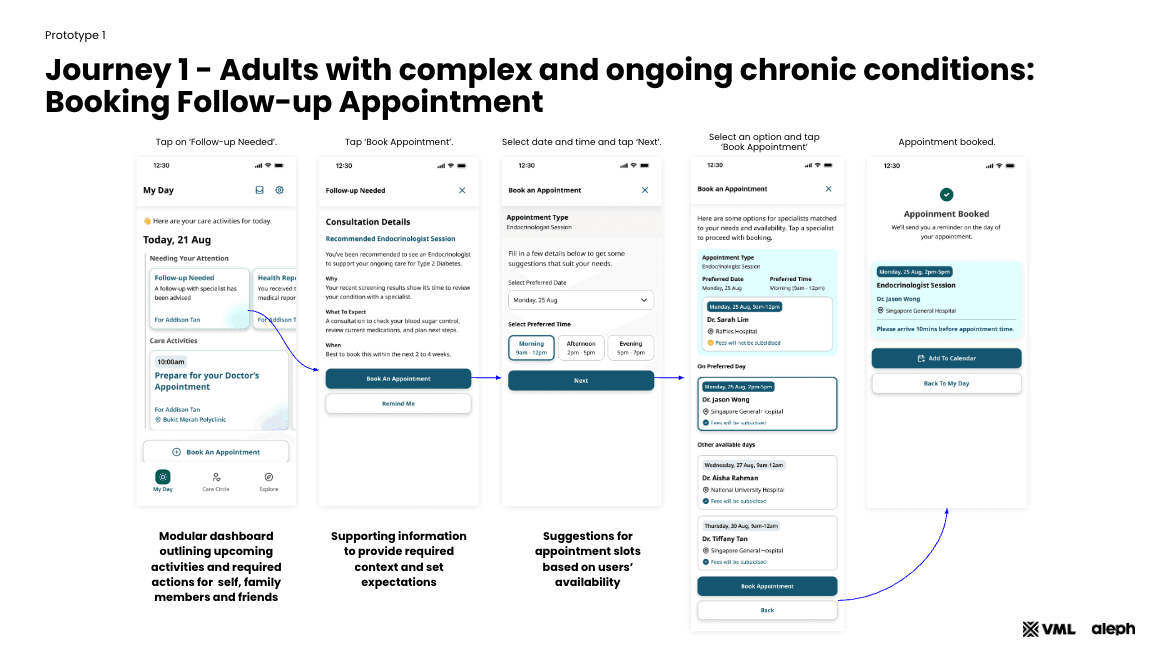
Incorporating Lived Realities into Design
"This is definitely much more user friendly than the current one, for sure. I would think this is much better to use."
Sandwich Generation | User
Results and Impact
Delivered a unified, goal-driven app built around real moments of care
Shifted MOH’s approach from policy-first to citizen-centred service design
Created modular templates and a shared design system for roll-out across clusters
Built a future-ready foundation for AI-enabled, preventive, and personalised healthcare
What I Learned
Policies and functions often shape how systems are built, but real design impact comes from understanding what people actually do.
When we design from the workarounds people already use, and the emotions they carry, we move from designing for users to designing with them. That’s how healthcare becomes not just compliant, but genuinely human.